Warmahordes League Season 1

WMlogo

Welcome the inaugural BAD Wargamers Warmahordes League.

The scenarios are using the steamroller 2014 pack, as below.

The Scoring is

  • 3 pts for win
  • 1 for draw
  • 0 for loss.
  • Bonus +1 for winning without a caster kill.

Game size from battle box up to 50pts by mutual agreement

I also suggest that to get new players interested new players will score double the points for the games they play! SO come on join the Warmahordes party

Steamroller2014

The competitors are –

table_0

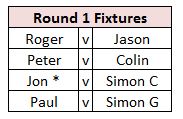
There will be 7 rounds, and the first round draw is … drum roll please

round_1

So, can you please contact your opponent and play the game. Then let me know the result. I don’t really want to set a timeout for games to be played, but shall we say round round 1 to be complete by April 30th. If sooner I can publish results and the next round!

Re-fighting the Battle of Nyborg 1659 or The Return of The Danish Brothers*

Over the last year or so BAD Wargamers have fought out a selection of battle scenarios involving Swedish and Danish forces and their allies in the latter half of the 17th century. I must confess this was down to my wish to use my new Swedish army more often under FOG Renaissance rules, and also my preference for historical scenarios over competition style games for a club night. Such games test not just the players’ rules skill and knowledge, but also their
ability to adapt to the political, strategic and tactical limitations of their historical counterparts. They are presented with a battleground, deployment and army composition not of their choosing, and given victory conditions beyond a mere points score.

Before I describe the re-fight I’ll give a brief historical context. After the Thirty Years War Sweden was the dominant military power in northern Europe. Denmark had lost her possessions in southern Sweden and the Polish Commonwealth was in a political and military turmoil the Poles called ‘The Deluge’. In 1655 Sweden took advantage and invaded Poland. Initial success was followed by stalemate, with changing alliances and many Swedish troops bogged down in garrisons and sieges. Denmark sought to take advantage of Swedish difficulties and declared war on her in 1657. But the Swedes seized the initiative and marched an army across the frozen Baltic to overwhelm the Danes who soon agreed to a humiliating peace. Less than a year later the Swedes attacked again, but the Danes held out and with the assistance of the Dutch navy forced the Swedes to retire from the Danish mainland.

Denmark now went on the offensive. She persuaded her allies to launch an expedition onto the Danish island of Funen which still had a large Swedish garrison. The Dutch navy would blockade the island to prevent Swedish reinforcements, and two Allied forces would land and unite to destroy the Swedish garrison. The Swedes were all cavalry and outnumbered 2:1, but the Allies also had their problems. Their forces were a mix of Danish, Dutch, Brandenburg, Imperial and Polish troops, split into two commands – and the commanders hated each other! Eberstein, who commanded the Imperial and Brandenburg cavalry with a couple of units each of Dutch and Danish infantry, wanted to bring the Swedes to battle as soon as possible; Schack, in command of the Danish cavalry and the bulk of the Dutch infantry, favoured a more cautious blockade of the Swedes until they were forced to surrender. Unable to decide on tactics the Allied generals at least agreed to take command on alternate days, and on the morning of their arrival before Nyborg Eberstein was in overall command.

danish_borthers_6


They found the Swedes drawn up in a strong defensive position. Their entire front was covered by hedges, their left flank secured by the sea and their right by woodland. Six units of veteran cuirassiers formed each flank command, with the right also having a unit of dragoons in the edge of the woods . A few artillery pieces were placed in the centre, with 4 infantry regiments that the
Swedes had managed to run through the Dutch naval blockade.

danish_brothers_2

The Allies drew up in two lines – Eberstein in front and Schack to the rear. Eberstein’s formation largely mirrored that of the Swedes, with two strong cavalry wings (the left reinforced with a Dutch infantry regiment) and a centre of 3 Danish/Dutch infantry with artillery behind hedges. Schack had two smaller cavalry wings and the bulk of the Dutch infantry. Eberstein still doubted Schack’s commitment to battle, and launched his assault before the second Allied line was in position. The Swedish cavalry counter attacked on both flanks and the battle raged for over two hours with the Swedes gradually gaining the upper hand. In the meantime Schack had brought the Allies second line right wing cavalry and Dutch infantry up. With the extra numbers and fresh troops the tide turned against the Swedes and their left wing cavalry routed and fled toward Nyborg. Pinned to their front by the advancing Dutch infantry and hit in the flank by the victorious Allied right flank cavalry the Swedish infantry also collapsed. Only the Swedish right flank cavalry were able to withdraw in some kind of order. With no means of escape the surviving Swedes surrendered unconditionally the following day. Some 3000 Swedish cavalry were immediately recruited into the Danish army, making it larger than before the battle.

danish_brothers_3

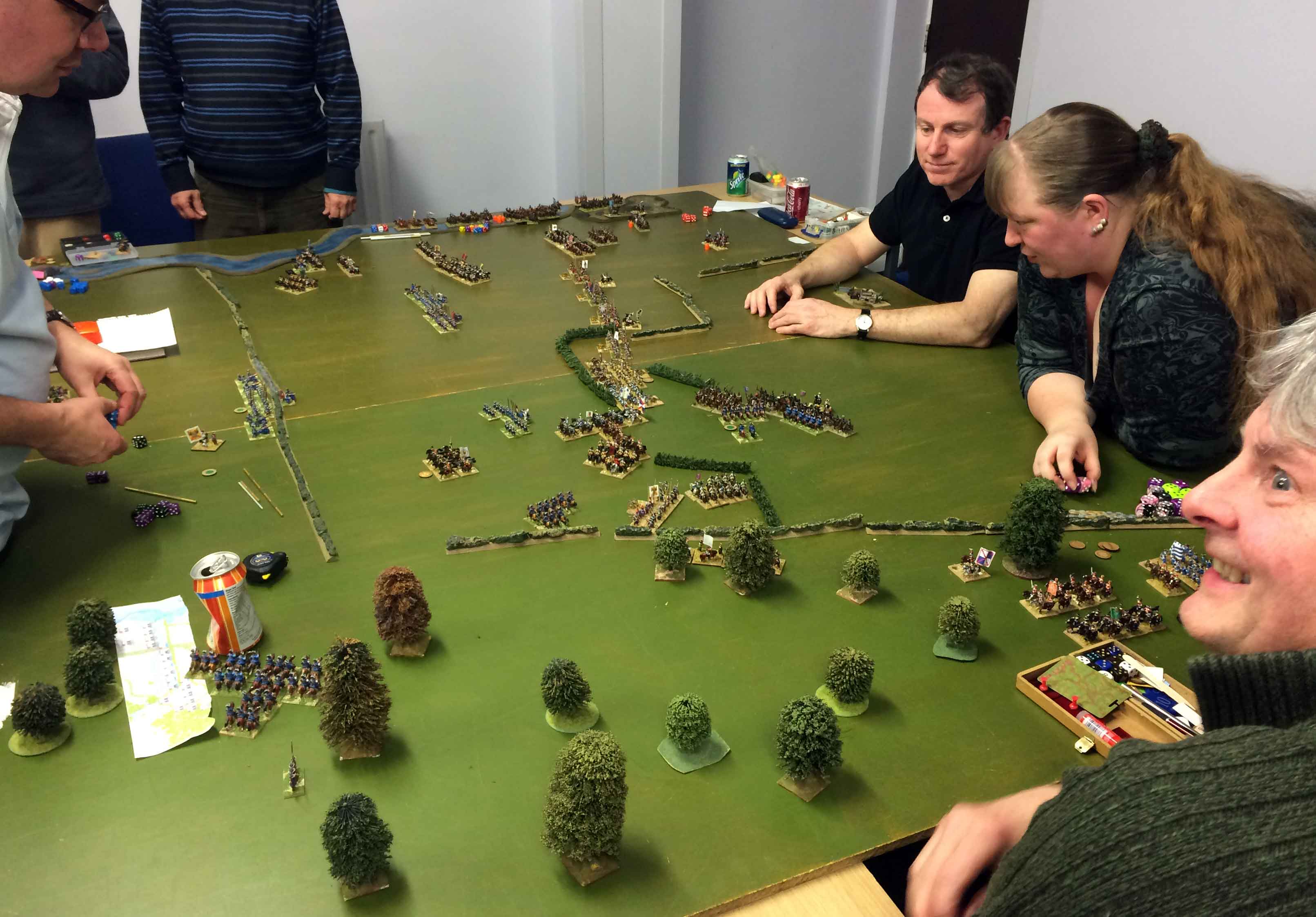
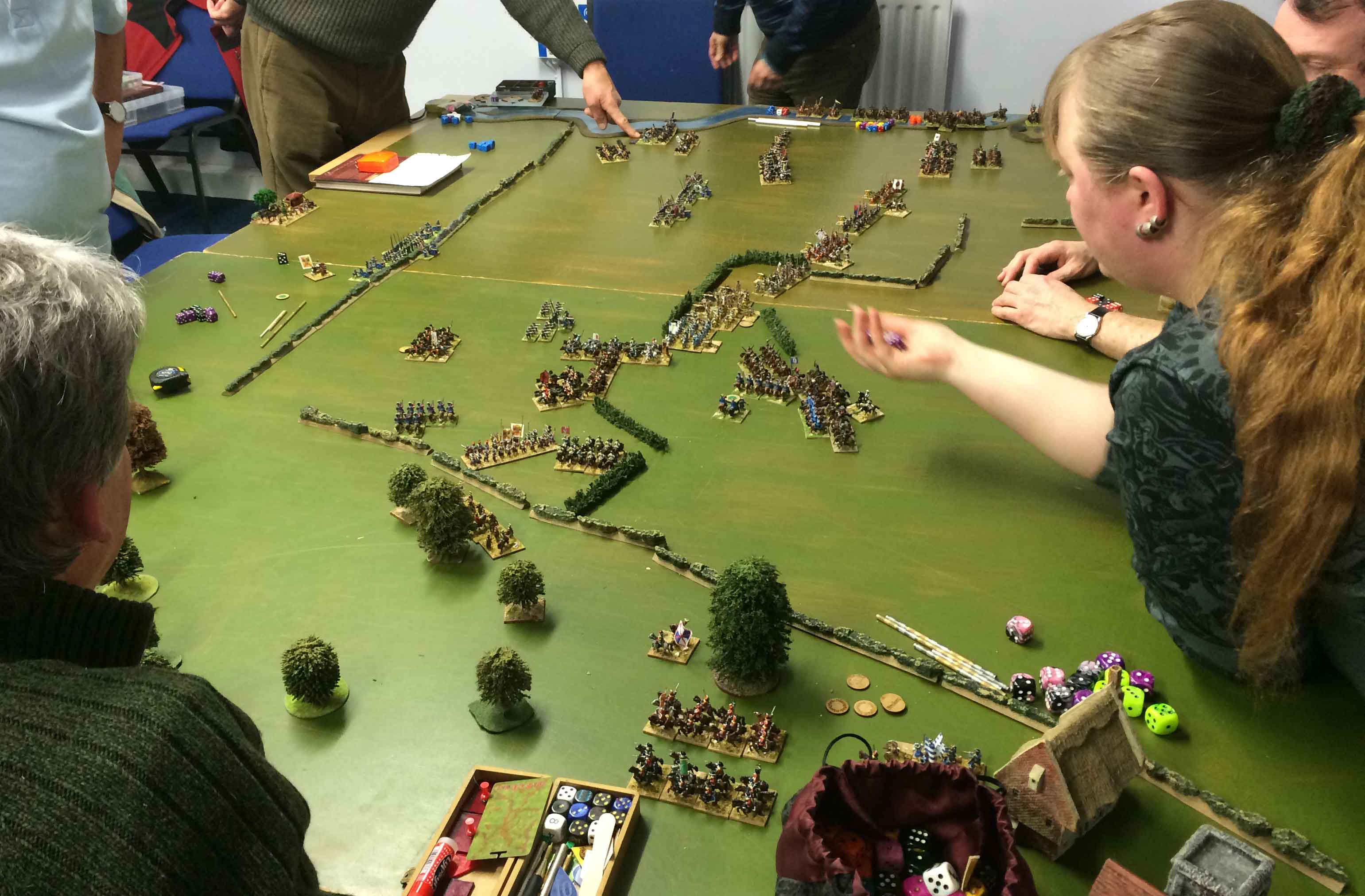
For the club re-fight the terrain and troop deployment was pre-set for the players, based on the historical battle. Steve took command of the Swedish left and Paul the right. On the Allied side Eberstein’s right was taken by Bob and the left by Lynette, and Schack’s right and left by Simon G and Dene respectively. Each command was briefed before battle commenced. The Swedes were informed
that, despite their strong defensive position, a stand-off would be considered a loss; If they were pinned down around Nyborg they would run short of supplies and be forced to surrender. The Allies had two briefings and were asked to act in the spirit of their historical commanders. Bob and Lynette (Eberstein’s command) were therefore committed to battle with the Swedes, with or without Schack’s support. Conversely Dene and Simon (Schack’s command) were asked to avoid battle initially. However they could move up to take Eberstein’s starting positions, and could intervene to cover any disaster or exploit any success. In addition, as Eberstein and Schack hated each other so much, they were told that generals from one command could not take charge or influence troops from the others command.

danish_brothers_4

The Allies had the first move and Eberstein’s command duly advanced their cavalry at speed, even before Schack had fully deployed, and the Swedish cavalry responded with vigorous counter attacks on both wings. The Allied and Swedish centres traded artillery shots, their infantry remaining behind the hedgerows at this stage. On the flanks the rival cavalry crashed into combat. Both sides fielded armoured cuirassiers with pistols (save for a lone unit of Croats on the Allied side), but the Swedes were classed as superior. On the Swedish right their cavalry made steady progress, slowed a little by hedgerows and the presence  of Allied infantry. On the Swedish left their cavalry went through the Allied cavalry like a knife through butter. In short order 5 of Eberstein’s cuirassier units were destroyed, their general dead and the Croats and the remaining cuirassier unit in rout. The Swedish cavalry had achieved this for the loss of just one base. Seeing an opportunity to press home their advantage the Swedish infantry advanced In the centre, leaving one unit to defend the guns.

danish_brothers_5

Schack’s command now advanced to steady the Allied position. Their right wing cavalry were understandably wary of taking on the superior Swedish cavalry, but their Dutch infantry (superior with
armoured pike) had no such qualms facing the Swedish infantry (who were only average for this scenario). On the Allied left Schack’s cavalry reinforcements made headway against the now outnumbered Swedish cavalry and they were gradually overwhelmed. With their right wing lost and their infantry losing the battle in the centre the Swedish position was getting desperate. Their victorious and largely intact left wing cavalry could probably have broken through the second Allied cavalry line, but would have been unsupplied as Nyborg would be lost to them. We decided to end the re-fight at this point and assumed the surviving Swedish cavalry (mostly veteran German mercenaries) would take up the offer of enlistment into the Danish army. The scenario outcome was
thus close to the historical outcome, though the Allied breakthrough had been on their left flank rather than their right.

danish_brothers1

*The Danish Brothers epithet derives from the first Swedish-Danish battle we played at the club. Simon and Dene Green took the Danish command that day and I remarked that‘The Danish Brothers’ was a counter in the boardgame ‘Britannia’. Simon and Dene have subsequently always played on the Danish side in these scenarios. Ironically at Nyborg there were two brothers in command of Danish
units under Schack.

Inaugural UK L’Art de la Guerre Tournament results

ADLG Day Sunday 8th of February

Results

Name Army Rd 1 Rd 2 Rd 3 Total Position
Alasdair Harley Hellenistic Greek 96 96 41 233 1st
Sebastien Mithradatic 96 93 41 230 2nd
Simon Clarke Spartacus 41 95 93 229 3rd
Brian Holmes Classical Indian 96 17 94 207 4th
Geoff Punshon Early Carthaginian 45 45 97 187 5th
Dave Fairhurst Late Imperial Roman 45 45 93 183 6th
Linda Fairhurst Palymran 39 94 41 174 7th
Tim Porter Late Imperial Roman 36 91 41 168 8th
Andy Finkle Alexandrian Macedonian 42 95 17 154 9th
Clive Mcleod Numidian’s 94 14 13 121 10th
Simon Le Re Mayer Early Imperial Roman 41 16 43 100 11th
Mark Clarke Early Imperial Roman 14 43 43 100 11th
Dave Saunders Alexander the Great 36 46 17 99 13th
Jesse Schoor Syracusan 14 37 47 98 14th
Matthew Scott Classical Indian 43 15 40 98 14th
Peter Card Early Successor 14 37 34 85 16th
Ray Boyles Early Imperial Roman 16 19 38 73 17th
Andy Scott Classical Indian 43 15 13 71 18th

Competiton rules were

Competition Rules : 200 point armies with standard sized 200 point tables of 120cm x 80cm. Players must bring their own terrain pieces

Lists to be drawn from either Classical Period or Roman Period army lists – From Rise to Fall, Rome : 503 BC- 476

Campaigns of Germanicus – recapture the eagle

The disaster at Teutoburger Wald was decisive only insofar as it drove the Romans back across the Rhine. The German tribes lacked the capacity to follow-up and were in any event satisfied with regaining their autonomy. Despite a few forays which amounted to little strategically but got the by Tiberius, w future emperor a Triumph, the Romans stayed behind the safety of the river. They were still profoundly shocked by Varus’s defeat, and the Empire could not spare the resources to mount a major invasion into German territory. Both sides therefore, watched each other warily but in relative comfort. But history suggests that Romans, like elephants, never forget, and they would be back. It would not be Tiberius who would lead the Roman retaliation but Germanicus, the great nephew of Augustus and adopted son of Tiberius.

For our 3rd game in the campaign we try to represent the recapture of the Eagle of the XIX. The format of the game was far more ‘straight up’ than in the previous two games. The roman field was formed up arrayed for battle. There were 7 objective dotted around the table, 3 of these would be potential spots for the Eagle. Each of these 3 would give the Romans a 33% of winning the game. Anything else would be a German victory. The other 4 would have some random effect on the game, because I like the moans and groans of that this generates.

In 14AD the Senate appointed Germanicus to take command of the armies on the Rhine at a time when the soldiers were in a state of mutiny. The major issues were the terms and conditions of service, including a brutal disciplinary regime. Germanicus was highly popular with the rank and file, and he solved the crisis through appeals to loyalty and selective purges of mutineers. He also adopted the tried and trusted method of leading his into the troops out field. Their target was the completely unsuspecting Marsi. Germanicus advanced with a caution that might have saved Varus had he adopted the same methods. He made sure the route was properly scouted and that his flanks and rear were well protected at all times. For the attacking Germans, ambushing a rabble was one thing, but taking on a disciplined Roman army quite another. Despite their best efforts to cause disruption, the frantic warriors could not break the Roman formations and were quite easily repulsed Germanicus laid waste to a broad swathe of German territory before returning to winter quarters. The following spring Germanicus was back, this time pushing into Chatti territory. Through the ame methodical approach, he captured and burned their capital and dispersed the survivors. Germanicus split his forces and gave command of the smaller army to Aulus Caecina who promptly defeated the Cherusci

 germ1The Romans deploy preparing to search for the eagle

Probably seeing the writing on the wall, Arminius’s besieged rival chieftain Segestes who appealed to Germanicus for relief. The Roman commander was happy to oblige and rescued Segestes along with much of the plunder taken from Varus, and captured Arminius’s wife. For this and his general success, Germanicus was given the title Imperator. Arminius, on the other hand, was incensed at this personal and military setback and exhorted the tribes to redouble their efforts against the Romans. The prospect of the German tribes reunifying under a rejuvenated Arminius alarmed Germanicus. He therefore decided to hit the Germans while they were mobilizing. He ordered Caecina to march through the Bructeri and instructed the cavalry commander Pedo to attack the Frisii Germanicus put four legions on board ships and sailed through the lakes to meet his subordinate commanders at the River Amisia. Once that was affected, he despatched flying a column under Lucius Sertinus against the Bructeri. In a lightning campaign he routed the German tribe and in doing so recaptured the lost Eagle of Legion XIX.

germ2

The Germans slowly appear out of the mist

Germanicus followed up with another destructive march through German territory in the region of the Teutoburger Wald. With no local opposition in the area, Germanicus took the opportunity to visit the site of the his massacre with army. It was therefore thoroughly sobered Roman army that a set off in pursuit of Arminius. Arminius was a master ambush and proved it again when at Germanicus’s cavalry pursued the Germans across the plains and into the Wald. The retreating warriors suddenly turned joined by others hidden in the woods and fought back the cavalry and an infantry reserve help Only sent to tory the timely arrival of Germanicus with the main army prevented a minor disaster. Seeing no advantage in further pursuit, Germanicus decided to withdraw by boat, but not Caecina and his divisions to march home by way of a narrow road surrounded by as the Long marshes and hills known his ridges. Arminius followed Caecina, waiting for moment to pounce. Caecina’s predicament was that he was in hostile territory surrounded by a fearsome enemy, and his path home urgent repairs. He hunkered down while his own engineers set to work under armed protection. The Germans skirmished relentlessly with the Romans, trying to get at the engineers. They had the advantage of being more lightly armoured than the Romans, as well as knowing the terrain

germ3The battle lines form.

Probably seeing the writing on the wall, Arminius’s besieged rival chieftain Scgestes who appealed to Germanicus for relief. The Roman commander was happy to oblige and rescued Segestes along with much of the plunder taken from Varus, and captured Arminius’s wife. For this and his general success, Germanicus was given the title Imperator. Arminius, on the other hand, was incensed at this personal and military setback and exhorted the tribes to redouble their efforts against the Romans.

germ4A large clash of arms in the centre

The prospect of the German tribes reunifying under a rejuvenated Arminius alarmed Germanicus. He therefore decided to hit the Germans while they were mobilizing. He ordered Caecina to march through the Bructeri and instructed the cavalry commander Pedo to attack the Frisii. Germanicus put four legions on board ships and sailed through the lakes to meet his subordinate commanders at the River Amisia. Once that was effected, he despatched flying a column under Lucius Stertinus against the Bructeri. In a lightning campaign, he routed the German tribe and in doing so recaptured the lost Eagle of Legion XIX. Germanicus followed up with another destructive march through German territory in the region of the Teutoburger Wald. With no local opposition in the area, Germanicus took the opportunity to visit the site of the massacre with his army. It was therefore thoroughly sobered Roman army that a set off in pursuit of Arminius.

germ5

Arminius was a master ambush and proved it again when at Germanicus’s cavalry pursued the Germans across the plains and into the Wald. The retreating warriors suddenly turned joined by others hidden in the woods and fought back the cavalry and an infantry reserve help. Only the timely arrival of Germanicus with the main army prevented a minor disaster. Seeing no advantage in further pursuit Germanicus decided to withdraw by boat, but not Caecina and his divisions to march home by way of a narrow road surrounded by marshes and hills known the Long Bridges. Arminius followed Caecina, waiting for moment to pounce.

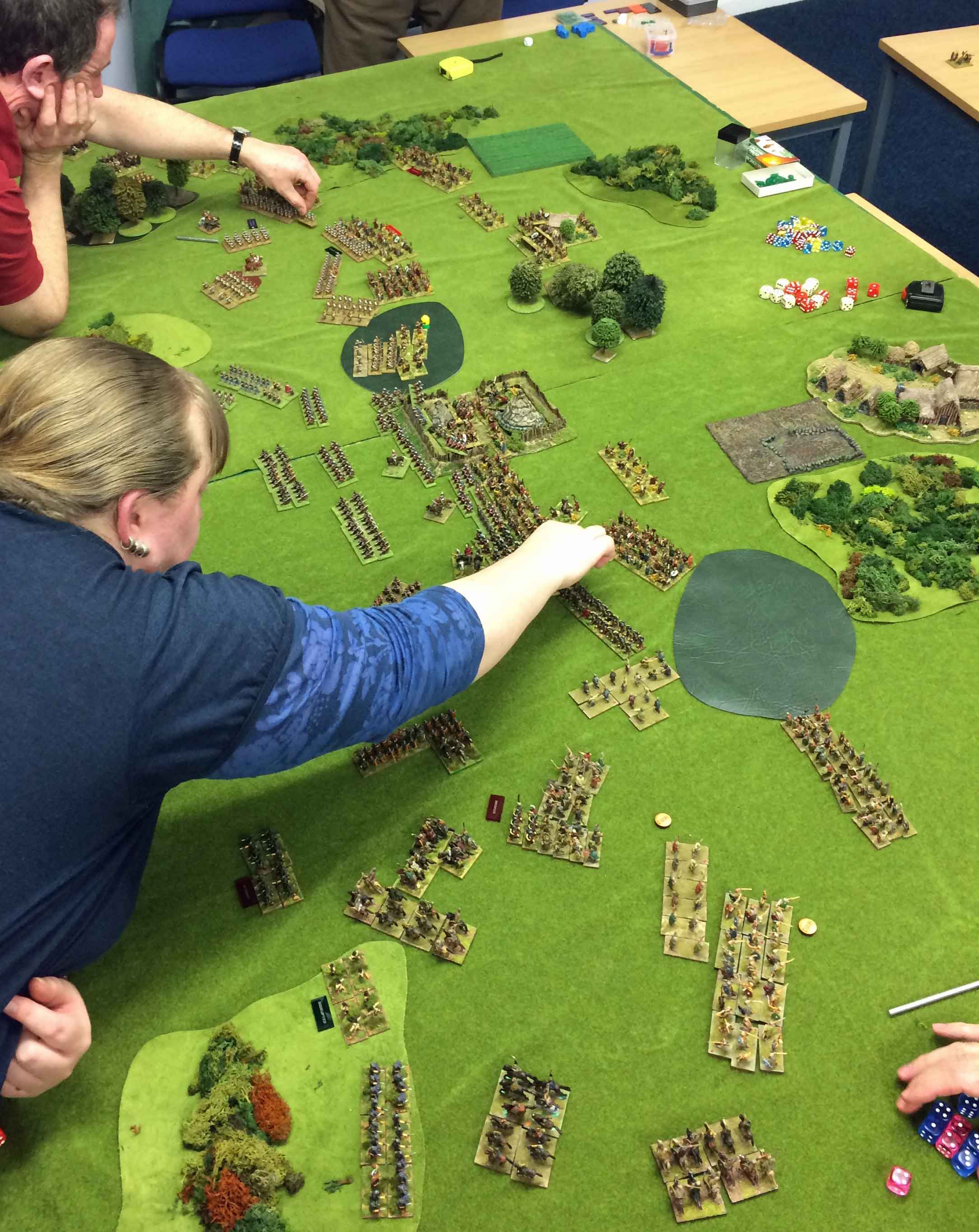
As a brief synopsis of our game. One of the random event was that the Germans we’re allowed an ambush as a largely undetermined position. This turned out to be right in the middle of the roman lines. The 3 large warbands were outnumbered, but could dealt a lot of damage and potentially dishearten the Romans. However, the dice determined that the Romans were not to be trifled with and this large ambush was swept away for no lose, and the Romans could advance unimpeded.  In FoG:AM the Germans are at at 16% disadvantage. During the initial clash they are evens, but they then suffer for the remainder of the melee. They have to be lucky initially otherwise they will be ground down by the Roman mincing machine. Largely the Germans were not lucky, and with much wailing and gnashing of teeth the Romans held them back and slowly destroyed there barbarian foes. The scenario rules meant that the Germans would fight on past there normal army break, while the Romans had to be precious about their loses.

After 3 hours the Romans has captured 2 of the 3 objectives where the Eagle would be found.  After much slaughter the Germans felt aggrieved (seemingly forgetting the joyous destruction of the Romans in the earlier games)… However, when it came to see who had won the game. The dice was thrown …  1-4 (2 objectives) Roman win, 5-5 (1 objective) German victory. The dice came up 6. German victory.

So in our campaign the Germans are 3 games up to none

Notable highlights.

  • Lynnette throwing double six , followed by a successive 11 to kill both of Peters generals in the melee. Despite this set back Pete was the only German player to cause the Legions any inconvenience.
  • Simon who excelled himself with his moaning at his lot in the game. Noted for his moaning, he went above and beyond in his pursuance to find misery in a club game 😉